
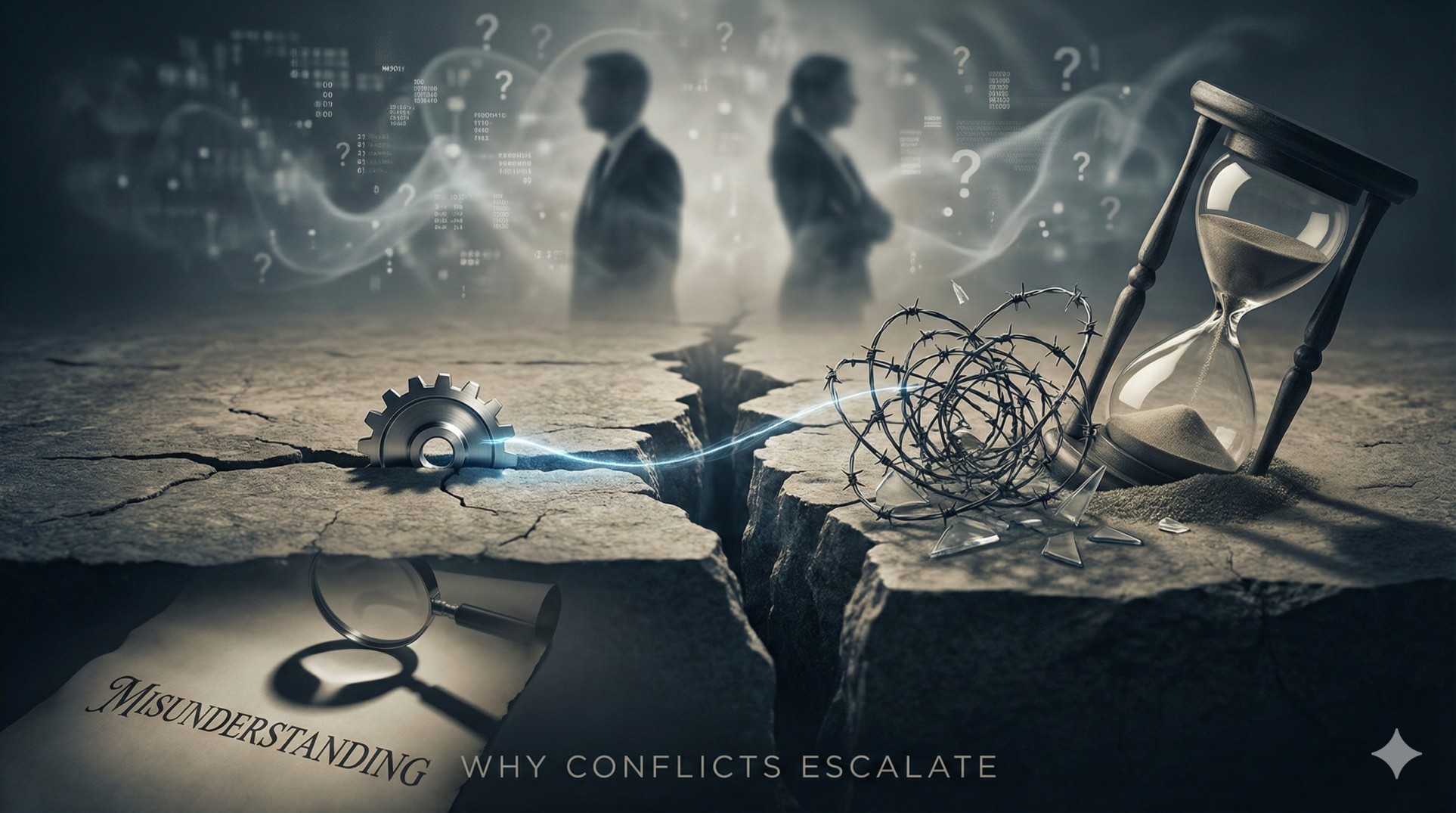
You’ve been there, right? One minute everything’s fine, the next minute you’re in a stupid fight that feels like it came out of nowhere. A sarcastic text gets read the wrong way. Someone forgets to reply to an email. You feel ignored, they feel attacked, and suddenly you’re both yelling about stuff that happened six months ago. How does a molehill turn into a mountain so fast, and why do conflicts escalate? I’ve watched it happen in my own life more times than I’d like to admit, and honestly, it almost always comes down to one thing: we misunderstand each other, then we let that misunderstanding fester.
It Usually Starts With Something Ridiculously Small
Let’s try to understand why conflicts escalate. Most blow-ups don’t begin with a betrayal or a screaming match. They start with something tiny that just… rubs you the wrong way.
- Your partner leaves dishes in the sink again.
- Your coworker takes credit for an idea in a meeting.
- Your friend makes a joke that lands flat and you’re not sure if it was actually a dig.
You don’t say anything because “it’s not a big deal.” Except it kind of is, and now you’re quietly stewing. They have no clue you’re upset, so they keep doing the thing, and the resentment quietly stacks up like unread emails. By the time someone finally snaps, the original issue is buried under weeks (or months) of unspoken irritation.
The Ugly Spiral Nobody Sees Coming
I love those clean little “stages of conflict” diagrams in textbooks, but real life is messier. Still, there’s definitely a pattern I’ve noticed:
- Something small happens.
- One person feels hurt/ignored/annoyed but stays quiet (or drops passive-aggressive hints).
- The other person either doesn’t notice or gets defensive.
- Now both of you are keeping score.
- Everything the other person does starts proving your story about them.
- Boom—full argument about something completely different, and the dishes are suddenly “evidence” that they don’t respect you.
It’s exhausting. And hilarious in hindsight. But in the moment? It feels totally justified.
Why Our Brains Make It Worse
We’re wired to protect ourselves. The second we feel even slightly threatened, our brain flips into “fight, flight, or freeze” mode. Rational conversation? Gone. All we can think about is being right and keeping ourselves safe. Add in a dash of confirmation bias—we only notice the evidence that supports our grudge—and you’ve got a perfect recipe for escalation.
I once had a friend who was convinced I was mad at her because I didn’t react to her Instagram story. I literally hadn’t seen it. She spent two days spiraling, I spent two days confused, and when we finally talked we laughed for twenty minutes straight. But if either of us had dug our heels in… yeah, that friendship could’ve ended over a double-tap.
Real-Life Examples That Still Make Me Cringe
- Work: My old boss once sent a two-word email—“See me.”—and half the team spent the morning convinced they were getting fired. Turns out he just wanted to congratulate us on a project.
- Family: My cousin and his wife nearly divorced over how to load the dishwasher. (I wish I were kidding.)
- Neighbors: I’ve seen grown adults call the cops because someone’s dog barked twice after 10 p.m. Big stuff—wars, corporate scandals, viral Twitter feuds—works exactly the same way, just with higher stakes and worse consequences.
How to Stop It Before You Both Look Ridiculous
The fix is annoyingly simple, which is why we rarely do it in the moment:
- Say the thing out loud, nicely, as soon as it bothers you. “Hey, when X happened, I felt Y. Can we talk about it?”
- Assume good intent until proven otherwise. Most people aren’t out to get you.
- Actually listen when they explain their side instead of rehearsing your comeback.
- If you’re too heated, take a break and come back when you’re human again.
I started doing this a couple of years ago—calling out the tiny stuff early—and I swear half my friendships and my marriage got ten times easier. It feels awkward at first, like you’re making a big deal out of nothing. But the alternative is letting nothing turn into everything.
Final Thought
Now you understand why conflicts escalate. Next time you feel that familiar knot in your stomach over something small, pause. Ask yourself: “Is this actually about the dishes… or is it about feeling unheard?” Nine times out of ten, clearing up the misunderstanding right then saves you weeks of drama.
We’re all just stumbling around trying to be seen and understood. A little honesty and a lot less mind-reading go a ridiculously long way.


