
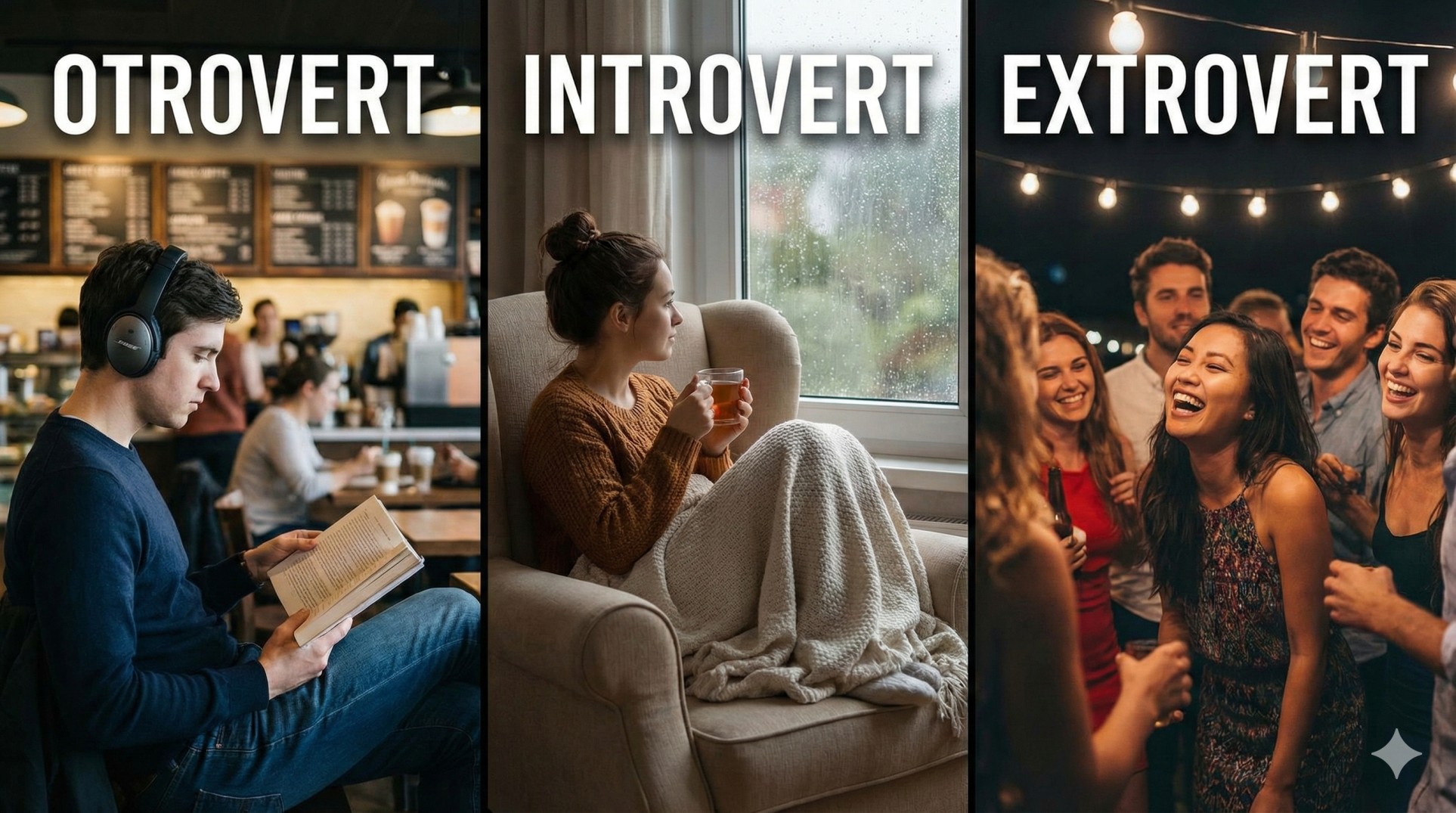
Growing up, most of us were boxed into just two categories: introvert or extrovert. Then ambiverts came along—those lucky folks who can flip between the two depending on the vibe. But lately, especially on social media, a new term has been popping up: otrovert.
If you’ve ever been super quiet and reserved with most people, yet totally open, chatty, and energetic around a small handful you really trust, this might hit home. It’s not about being shy or antisocial—it’s about who makes you feel safe enough to let your guard down.
In this piece, I’ll dive into what an otrovert really is, why so many people are relating to it, and how it plays out in real life—like in relationships, at work, or just day-to-day interactions.
So, What Exactly Is an Otrovert?
At its core, an otrovert is someone who:
- Comes across as introverted (or even distant) around most people,
- But flips the switch to outgoing, expressive, and fully themselves with a select few they deeply trust.
The big difference from classic introverts? Introverts often recharge alone because crowds or stimulation drain them—no matter who’s there. Otroverts? It’s all about the people. Their energy depends on emotional connection and safety, not the size of the room or the noise level.
When they feel truly seen and safe, they light up. When they don’t, they retreat. It’s like their personality has a password—only the right people get full access.
Common Traits You’ll Recognize If This Is You
No two otroverts are exactly alike, but here are some patterns that come up a lot:
- Selective Energy: You’re warm, funny, and engaging with your inner circle, but quiet or low-key with everyone else. Strangers might even think you’re standoffish at first.
- The “Switch” Effect: Friends from different parts of your life might describe you completely differently—one group sees the reserved version, the other sees the lively one.
- Trust Builds Slowly: You don’t open up overnight. Deep bonds take time, consistency, and real emotional safety.
- Super Tuned-In: You pick up on vibes, subtle changes in tone, or unspoken tension quickly. It’s a mix of empathy and self-protection.
How Does It Compare to Introvert, Extrovert, or Ambivert?
The old spectrum doesn’t always fit perfectly. Here’s a simple breakdown:
| Type | Energy Source | Social Style | Key Influence |
|---|---|---|---|
| Introvert | Solitude | Reserved, prefers small/low-key | Environment/stimulation |
| Extrovert | Interactions with others | Outgoing, energized by crowds | Social activity |
| Ambivert | A bit of both | Adapts to the situation easily | Context/mood |
| Otrovert | Depends on emotional trust | Quiet with most, expressive with few | People and safety |
Otroverts aren’t just “in the middle”—their social side is unlocked by relationships, not the setting.
Signs You Might Be an Otrovert
Do any of these feel familiar?
- You hate small talk but can talk for hours about real, deep stuff with close friends.
- New people think you’re shy; old friends say you’re the life of the party.
- Group events drain you unless your trusted people are there.
- Superficial or judgmental vibes shut you down fast.
- You need genuine connection to show your full personality.
- Alone time recharges you, but so does time with “your” people.
- You’ve been called “moody” or “hard to read” because you change based on who you’re with.
- Big friend groups? Not your thing—you prefer a few deep bonds.
If a lot of these resonate, welcome to the club!
Why This Feels So Real (Even If It’s Not “Official”)
“Otrovert” isn’t in psychology textbooks yet—it’s a newer term that’s gained traction online because it describes something many of us experience but didn’t have words for. It’s rooted in real patterns around attachment, trust, and social selectivity. Some trace it to ideas about needing emotional safety before opening up, or being highly sensitive to social cues.
In a world that pushes the introvert/extrovert binary, this term fills a gap for people who feel misunderstood.
The Upsides of Being an Otrovert
It’s not all challenges—there are real strengths:
- Your relationships tend to be deep, authentic, and lasting.
- You set strong boundaries naturally.
- You’re great at meaningful connections, not just surface-level ones.
- When you’re “on,” you’re genuinely engaging and adaptable.
This can make you a rock-solid friend, partner, or colleague in the right settings.
The Tough Parts (And How to Handle Them)
On the flip side:
- People might misread your quiet side as disinterest or rudeness.
- Networking or big social scenes can feel exhausting.
- It takes longer to build new relationships.
- Forced socializing leaves you wiped out.
The key? Awareness and communication. Let people know you warm up slowly—it’s not about them, it’s about trust.
Otroverts in Relationships and Communication
This is where it gets relatable. Partners might love your playful, open side at home but get confused when you’re guarded in public. Conflicts? Rushing or harsh tones can make you shut down—patience and reassurance work wonders.
Tips if this sounds like you:
- Share early: “I open up when I feel safe—it takes time, but it’s worth it.”
- Use text or writing for big feelings if talking feels hard at first.
- Prioritize your small circle for recharge time.
- Set boundaries kindly: “Big groups aren’t my thing, but I’d love one-on-one.”
- Give yourself grace in new situations—ease in slowly.
Quick FAQs
- What’s the simplest definition? Introverted with most, extroverted with trusted few.
- Is it different from being shy? Yes—shyness is fear-based; this is trust-based.
- Introvert or extrovert? More introverted-leaning, but with an extroverted side for the right people.
- Vs. ambivert? Ambiverts shift with the situation; otroverts shift with the people.
- Why do some interactions drain you? Lack of emotional safety saps your energy.
Wrapping It Up
The buzz around “otrovert” reminds us that personalities are nuanced—no one fits neatly into old boxes. If you’ve ever heard, “You’re so different when you’re comfortable,” that’s not inconsistency. It’s just you being selective about who gets the real, vibrant version.
You’re not broken or antisocial—you’re guarded in a world that often feels superficial. Embrace it, communicate it, and surround yourself with people who make you bloom. If this describes you, you’re in good company with a lot of us out there.
Struggling With Misunderstandings and Tension?
If misunderstandings drain you, my book Conflict Resolution offers simple, practical techniques you can use right away to communicate better and reduce tension in any relationship.